Raffia Twine and Plastic Storage Boxes for Sorting Harvested Crops
Handling plantation produce does not end when the harvest is collected. Grouping, sorting, and moving goods also require suitable equipment. Raffia twine and container boxes serve different purposes that can be planned within one list of operational requirements.
1. Map the goods flow before choosing equipment
Set out a simple sequence: receiving produce, separating groups, weighing, temporary storage, and dispatch. At each stage, note whether goods need tying, containment, or packaging. This lets the quantities of twine and containers follow the work being done.
For businesses handling several types of plantation produce, establish an easy-to-understand labeling system. Twine or container colors can serve as internal codes, for example to distinguish groups of goods. Document what each code means so the system does not depend on one person's memory.
2. Choose raffia twine for tying requirements
When requesting a raffia twine quotation, explain what will be tied and how. Compare roll weights, color options, and purchase packaging. Roll weight does not automatically indicate twine length or load-bearing ability; confirm these details if they are requirements for use.
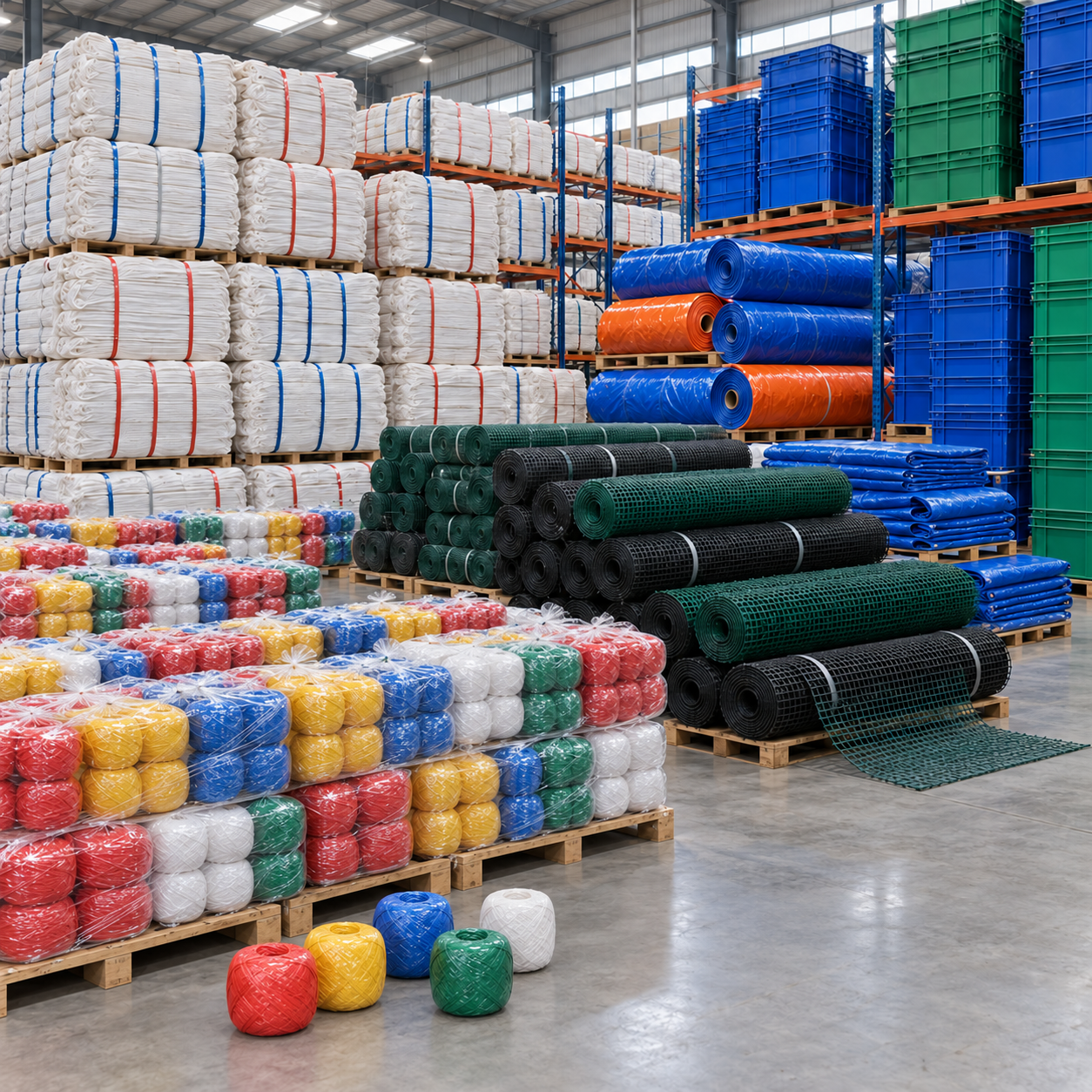
The DEXPLAST catalog lists plastic raffia twine rated at 7 ons (700 g). Confirm the unit, net or gross weight, and number of rolls offered. Assess raffia twine for grouping packages according to the task; for lifting goods, use the lifting equipment specified by your operating procedures.
3. Check container box dimensions and intended use
Volume in liters indicates available space, but internal dimensions determine whether items fit. Check external dimensions too if containers will be placed on shelves, trolleys, or vehicles. Ask whether the model has a lid, can be stacked when full, or can be nested when empty.
For direct contact with food produce or fishery products, request confirmation of material suitability and cleaning instructions. Load capacity and stacking limits must be based on the container type, rather than inferred from its volume or photograph.
| Products | Key parameters |
|---|---|
| Raffia twine | Tying application, roll weight, color, packaging, and quantity |
| Container boxes | Internal/external dimensions, volume, lid, load, and stacking |
| Food-related requirements | Confirm material and suitability for use |
| Operations | Number of workstations, transfer flow, and storage method |
4. Calculate quantities based on container circulation
The number of containers depends on how much produce is at each stage and when containers become available for reuse. Track containers in the sorting area, in transit, or awaiting cleaning. Initial usage data will help refine future requirement estimates.
To begin consulting DEXPLAST in Teluk Naga, send the type of goods, workflow photos if available, size preferences, and estimated quantities. The team can match the request with catalog options, then confirm specifications and availability in the quotation.
Your requirements checklist.
- Goods to be tied or contained
- Raffia roll weight and color options
- Container box dimensions and volume
- Load, lid, stacking, and suitability for use
- Quantity of each product and delivery destination
Send the information you already have. Other details can be added during consultation.
Request a WhatsApp QuotePrepared by DEXPLAST as procurement guidance. Specifications, application suitability, availability, and delivery must be confirmed in the quotation.